Usefullness Of Organic Farming

Organic farming can be defined as an agricultural process that uses biological fertilizers and pest control acquired from animal or plant waste. Organic farming was actually initiated as an answer to the environmental sufferings caused by the use of chemical pesticides and synthetic fertilizers. In other words, organic farming is a new system of farming or agriculture that repairs, maintains, and improves the ecological balance.
Types of Organic Farming
Organic farming is divided into two types, namely:
- Integrated organic farming
- Pure organic farming
Pure organic farming means avoiding all unnatural chemicals. In this process of farming, all the fertilisers and pesticides are obtained from natural sources such as bone meal or blood meal.
Integrated organic farming includes the integration of pest management and nutrients management to achieve ecological requirements and demands.
Meaning and Importance of Organic Farming
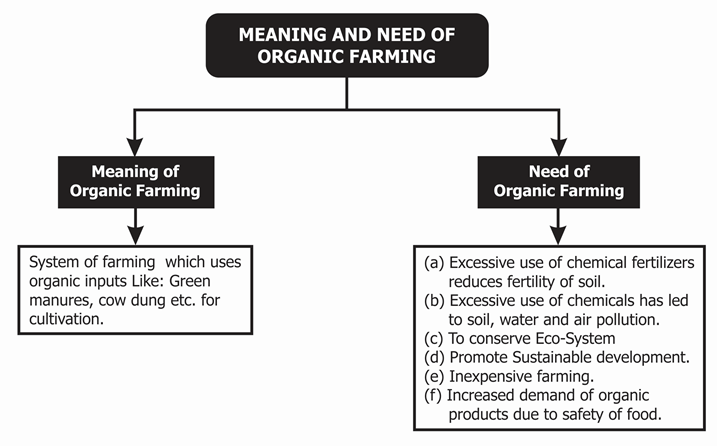
Meaning of organic farming
System of farming that uses organic inputs like green manures, cow dung, etc., for cultivation.
Need of organic farming
- Excessive use of chemical fertilisers reduces the fertility of soil.
- Excessive use of chemicals has led to soil, water, and air pollution.
- To conserve ecosystem.
- To promote sustainable development.
- Inexpensive farming.
- Increased demand of organic products due to safety of food.
Benefits Of Organic Farming
- Environment-friendly.
- Promotes sustainable development.
- Healthy and tasty food.
- Inexpensive process.
- It uses organic inputs.
- Generates income.
- Generates income through exports.
- Source of employment.
- Organic farming is more labour intensive. Hence, it generates more employment.
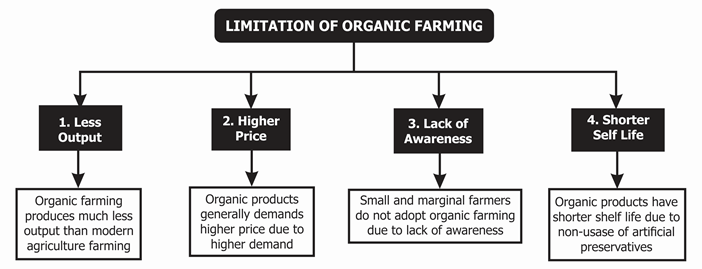
Limitations of organic farming
- Less output.
- Higher price.
- The lack of awareness.
- Organic products generally demand a higher price due to a higher demand.
- Shorter shelf life.
- Organic products have a shorter shelf life due to the absence of artificial preservatives.
Advantages of Organic Farming:
Economical: In organic farming, no expensive fertilisers, pesticides, or HYV seeds are required for the plantation of crops. Therefore, there is no extra expense.
Good return on Investment: With the usage of cheaper and local inputs, a farmer can make a good return on investment.
High demand: There is a huge demand for organic products in India and across the globe, which generates more income through export.
Nutritional: As compared to chemical and fertiliser-utilised products, organic products are more nutritional, tasty, and good for health.
Environment-friendly: The farming of organic products is free of chemicals and fertilizers, so it does not harm the environment.


Comments
Post a Comment